Queue Management System in Saudi Arabia: 7 Sectors Winning in 2026
Adopting a queue management system in saudi arabia is no longer a nice-to-have reserved for big banks. In 2026, clinics, telecom stores, logistics counters, and quick-service restaurants across the Kingdom are all using smart queuing to serve more people with the same staff. This article looks at the sectors seeing the clearest returns and the metrics that prove it.
Where our 2026 guide earlier covered buying criteria, here we focus on outcomes: who deploys queuing, what they measure, and how the numbers change after go-live. If you run any customer-facing operation, at least one of these use cases will match yours.
What Separates a Smart Queue From a Simple Ticket Machine?
A basic ticket dispenser only hands out numbers. A true queue management platform orchestrates the entire visit: it predicts wait times, routes visitors by need, notifies them by SMS, and records every timestamp for analysis. That data layer is what converts a line into a managed process.
The difference shows up in the reports. Managers can see service time per agent, abandonment rate, and peak-hour load, then staff accordingly. Guessing is replaced by evidence.
The three data points that matter most
- Wait time: how long before a visitor is called.
- Service time: how long the actual transaction takes.
- Abandonment rate: the share of visitors who leave before service.
Seven Sectors Seeing Real Returns in 2026
Each of these industries faces its own flavour of congestion, and each gains differently from structured queuing.
| Sector | Main queuing challenge | Biggest gain |
|---|---|---|
| Banking | Mixed simple and complex transactions | Routing cuts teller idle time |
| Healthcare | Appointments colliding with walk-ins | Calmer waiting rooms, fewer no-shows |
| Telecom retail | Long SIM and device setups | Mobile queuing frees the showroom floor |
| Government | High volume, multiple services | Transparent, fair, auditable queues |
| Quick-service dining | Peak-hour drive-thru congestion | Faster order-to-collection times |
| Logistics counters | Walk-in parcel collection surges | Predictable staffing at peaks |
| Automotive service | Vehicle drop-off bottlenecks | Smoother bay scheduling |
Quick-service dining and the drive-thru angle
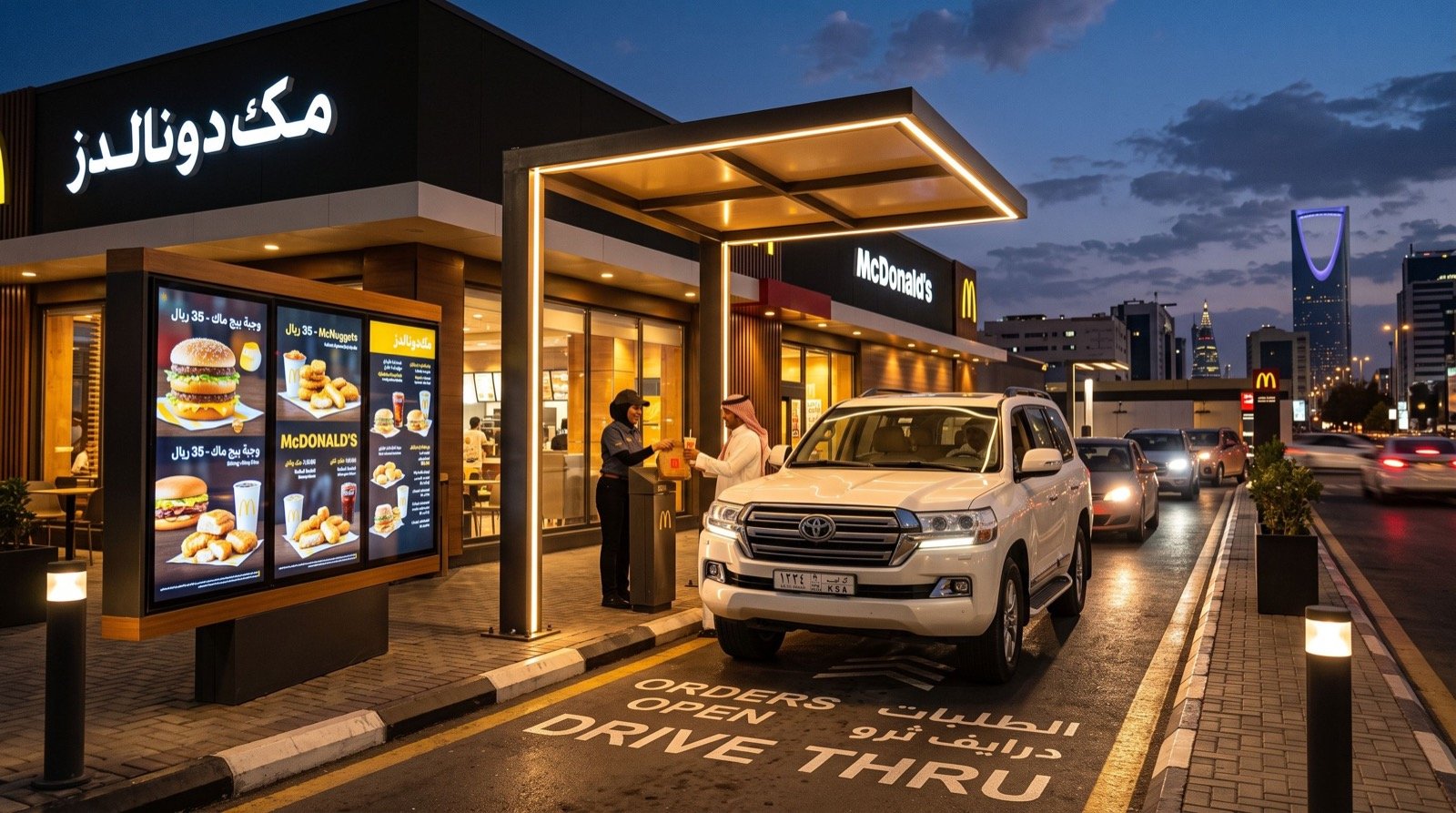
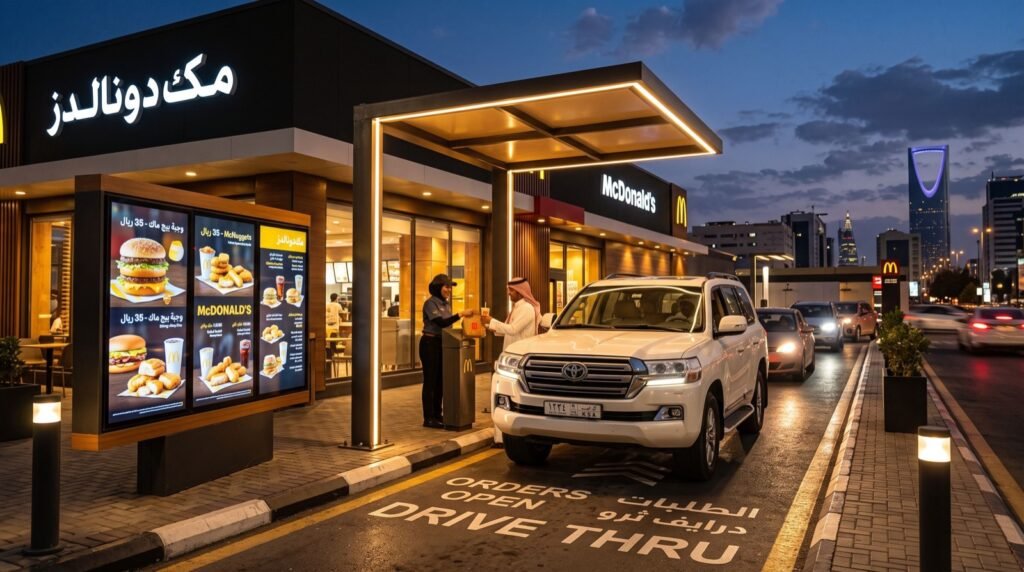
Restaurants are a special case because much of their congestion happens outside, in the lane. A dedicated HME Drive Thru in Riyadh headset and timer setup lets staff communicate clearly with waiting cars and measure lane speed, complementing the in-store queue system so both the counter and the lane stay fast during peak hours.
How Do You Measure Queue Management ROI?
Return on investment from queuing is tangible because the baseline is easy to capture. Measure your average wait time and abandonment rate for two weeks before installation, then compare the same window after go-live.
A simple ROI framework
- Baseline: record current wait, service, and abandonment figures.
- Deploy: install, localise in Arabic and English, and train staff.
- Measure: track the same metrics for one month.
- Value: convert reduced walkaways and overtime into real currency.
Customer experience research summarised by McKinsey & Company shows that consistency across every touchpoint is the strongest predictor of overall satisfaction, and a predictable queue is one of the most visible touchpoints a branch has.
Features That Drive Those Results
The sectors above succeed because they switch on the right capabilities rather than every possible feature.
- Mobile check-in: customers join remotely and arrive just in time.
- Priority routing: VIPs, appointments, and accessibility needs are handled fairly.
- Live dashboards: supervisors open or close counters in real time.
- Automated SMS: reduces crowding by letting people wait anywhere.
- Cloud reporting: head office compares branches on one screen.
Why localisation decides adoption
A system that speaks the customer’s language gets used. Full Arabic signage, tickets, and voice calls alongside English remove friction for first-time visitors and keep the queue data clean.
Getting the Rollout Right
Technology rarely fails on its own; rollouts stumble on training and support. Partner with reliable local experts who install, localise, and train on-site, then stay available for hardware support. Begin with one high-traffic pilot branch, prove the numbers, and scale with confidence.
A pragmatic rollout checklist
- Pick one busy branch as the pilot and set a clear baseline.
- Localise every customer touchpoint in Arabic and English.
- Train floor staff to guide early visitors to the kiosk or QR check-in.
- Review dashboards weekly and adjust staffing to the real demand curve.
Common Mistakes That Undermine Queue Systems
Even strong technology disappoints when the rollout ignores human behaviour. The most common failure is leaving the old paper dispenser beside the new kiosk, which splits visitors into two uneven lines and corrupts the data from day one.
Another frequent misstep is treating the dashboard as a report nobody reads. The value of real-time analytics only appears when a supervisor acts on it within the same shift, opening a counter the moment the predicted wait creeps past target.
Pitfalls to avoid
- Mixed check-in methods: retire paper tickets fully when the digital system goes live.
- No ownership: assign one branch manager to own the dashboard and the targets.
- Over-segmentation: too many service categories confuse visitors and thin out counters.
- Ignoring feedback: add a quick post-service rating to catch problems early.
Organisations that avoid these traps protect the clean data that makes every later optimisation possible. A tidy queue is also a quieter, safer branch, which matters during Riyadh and Jeddah peak seasons when footfall surges.
Seasonal planning for peaks
Demand in the Kingdom is not flat. Salary days, school enrolment windows, and religious seasons all create predictable spikes. Use historical queue data to forecast these peaks and roster extra staff before the rush, rather than reacting once the line has already formed.
Frequently Asked Questions
Which sector benefits most from a queue management system in Saudi Arabia?
Banking and government service centres usually see the fastest, largest gains because they handle high volumes of mixed transactions, but healthcare and telecom retail follow closely thanks to appointment and mobile-queuing features.
Can a queue system work with a restaurant drive-thru?
Yes. In-store queuing handles counter orders while a dedicated drive-thru headset and timer solution manages the lane, so both channels stay fast and are measured separately during peak hours.
How long does deployment take?
A single-branch pilot can typically be installed, localised, and staffed within a few weeks, after which multi-branch rollouts move faster because the configuration is already proven.
Is the data secure and compliant?
Leading platforms store data on encrypted cloud or on-premise servers with role-based access, keeping visitor information protected and auditable for compliance teams.
Conclusion
Across seven very different sectors, a queue management system in Saudi Arabia delivers the same core win in 2026: more customers served, calmer branches, and decisions backed by real data instead of guesswork. Start by baselining your busiest location, choose the features your sector actually needs, and lean on experienced local partners to make the rollout stick. The branches that measure and manage their queues are the ones winning customer loyalty this year.